Introduction
If you also know the half hour of stiffness between getting out of bed and your first coffee, you have a working relationship with inflammation.
That is one reason CBD for inflammation has attracted so much attention. But does CBD really help heal the pain and irritation?
In this guide, we’ll look at the types of inflammation CBD interacts with, what studies say, and how it compares with anti-inflammatory drugs.
First, the thing itself. What is inflammation, and why does your body keep doing it?
- CBD has shown anti-inflammatory properties in pre-clinical research, particularly for joint discomfort and gut inflammation. Human trial evidence is still limited.
- So, don’t treat CBD as a replacement for NSAIDs or prescribed medications. Use it as a supplement for managing chronic inflammation.
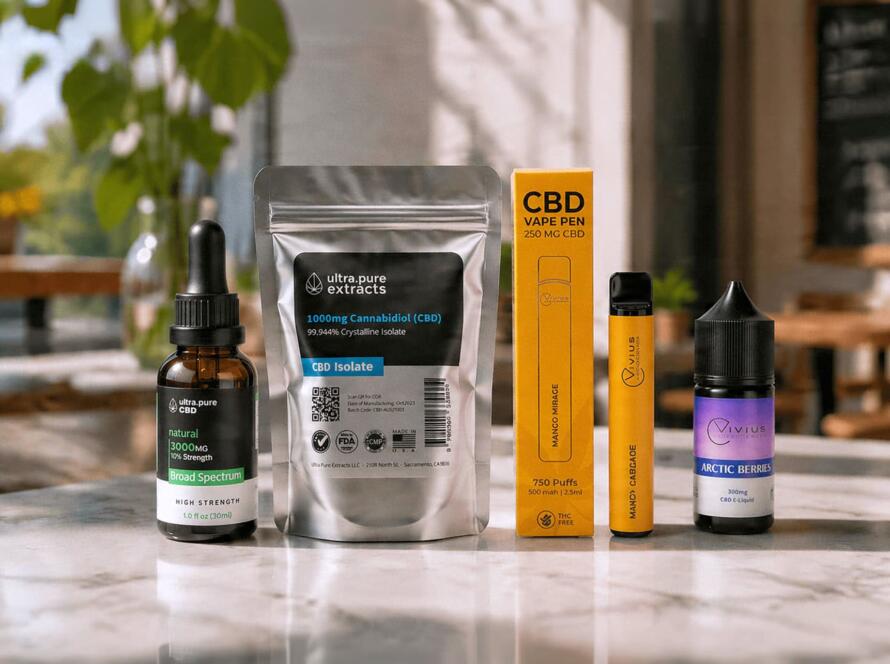
- THC-free broad spectrum oils are the common format for daily use.
How does Inflammation work?

Inflammation is often misunderstood. Instead, it is your immune system’s fire response. The fire itself isn’t the villain. The problem starts when the alarm never switches off.
Now, there are two categories of inflammation: acute vs chronic.
Acute inflammation is the good kind. You cut your finger, sprain an ankle, or catch a flu, and the area turns red, warm, and swollen. That’s when the immune cells flood in to handle the damage & help the body heal from it.
Days later, the job is done, and everything stands down. The concern is when the stand-down order never arrives, i.e., your body is in constant attack.
That’s exactly what is termed chronic inflammation. In this, your immune system keeps releasing inflammatory signals for months or years, to the point that it starts irritating healthy tissue along the way.
Researchers have linked that slow burn to a long list of autoimmune conditions like:
- Joint degeneration and pain
- Inflammatory bowel diseases like Crohn’s and ulcerative colitis
- Rheumatoid arthritis, thyroid, diabetes, etc.
- Cardiovascular diseases
However, it does not mean inflammation is the cause of every chronic condition. Triggers can be many, but understanding and managing persistent inflammation can be an important part of treating the condition causing it.
This is exactly where CBD attracts all the attention and hype. The rest of this article is all about this.
How CBD interacts with inflammation
To understand the effect of CBD on the inflammatory organs/system of our body, we need to first understand the whole mechanism.
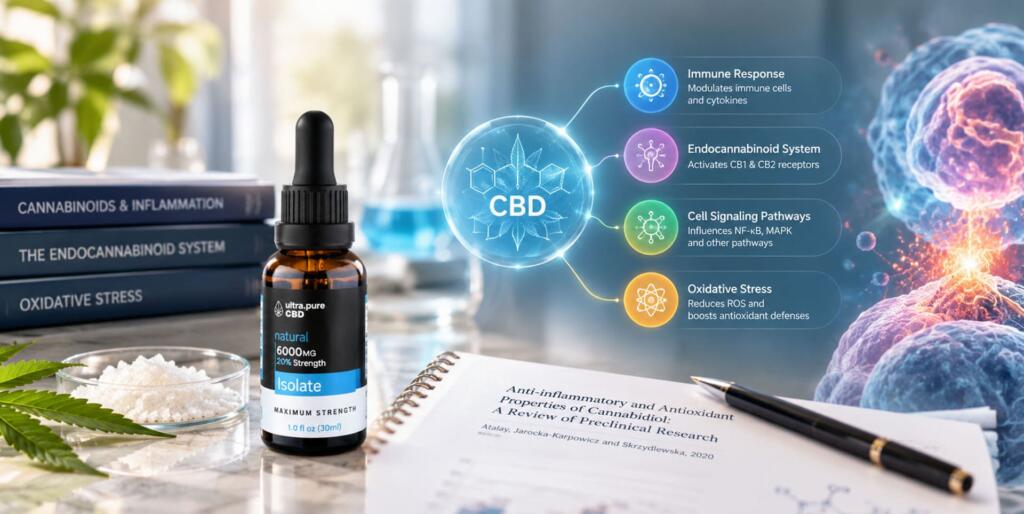
Every one of us runs on the endocannabinoid system (ECS), a signalling network that helps the body keep things in balance: mood, sleep, appetite, immune response. It works through two main receptors, along with enzymes and other molecules that regulate our immune system.
CB1 sits mostly in the brain and nervous system. CB2 shows up heavily on immune cells, which is precisely where inflammation happens.
One detail worth knowing: CBD doesn’t bind to CB1 the way THC does, which is why it doesn’t get you high. Its relevance for inflammation is what it does around CB2 and the immune signalling NF-κB attached to it. Pre-clinical lab trials suggest that CBD can influence this signalling pathway and reduce the production of inflammatory cytokines like TNF-alpha and IL-1beta.
Now that gives researchers a possible explanation for some of the anti-inflammatory effects seen in cells and animal models. But a mechanism can explain how something might work without proving that it will work the same way in people.
So, what has the research actually found so far? That’s where things get more interesting.
What the research shows about CBD for Inflammation?
Below are some studies done to study the effects of CBD for inflammation:
1. The research: Hammell et al., 2016
Who: Researchers at the University of Kentucky tested CBD in rats with experimentally induced arthritis.
What they found: A CBD gel applied to the skin reduced joint swelling, immune cell activity, and several signs linked to pain and inflammation in the rats. The effect increased with the dose used in the study.
Why it matters: This is one of the clearer pieces of preclinical evidence behind the interest in CBD and joint inflammation. But since it was an animal study using a topical CBD gel, it cannot tell us whether CBD oil will produce the same result in people.
Source: PubMed
Another study talks about the anti-inflammatory effects of CBD on stress, and the results were positive.
2. The research: Atalay, Jarocka-Karpowicz and Skrzydlewska, 2020
Who: This was a research review looking at the anti-inflammatory and antioxidant properties of CBD and the different biological pathways involved.
What they found: The review found evidence from preclinical research that CBD can affect several pathways linked to inflammation and oxidative stress. It also highlighted the role of the endocannabinoid system and other targets rather than pointing to one single mechanism.
Source: PubMed
3. The research: Irving et al., 2018
Who: Researchers studied a CBD-rich botanical extract in people with ulcerative colitis (an inflammatory bowel disease)
The study: Some participants took a CBD-rich botanical extract, and others took placebo capsules for 10 weeks.
What they found: After 10 weeks, the CBD group did not show a statistically significant improvement in remission compared with placebo. The primary endpoint came back negative: remission rates were 28% with CBD versus 26% with placebo, too close to call.
Source: Irving et al., Inflammatory Bowel Diseases, 2018
Overall, evidence around CBD for inflammation is promising, but it is still developing. Major animal trials and lab trials have shown significant results. But human evidence for inflammation is very thin and mixed. Larger RCTs are needed.
Types of inflammation CBD is most studied for

Joint inflammation
This is where CBD gets the most attention, particularly for arthritis and joint discomfort. The WHO estimates 528 million people were living with osteoarthritis in 2019, and 73% of them were over 55. In short, joint discomfort in older adults isn’t an edge case.
Gut inflammation
CBD has been studied in inflammatory bowel conditions such as ulcerative colitis and Crohn’s disease. Laboratory and animal research is encouraging, but human trials are still limited.
Neuroinflammation
Researchers are looking at CBD in conditions involving neuroinflammation, including multiple sclerosis and Alzheimer’s disease. This is still an early area of research.
Skin Inflammation
Surprisingly, this is one of the fastest-growing areas for CBD use. Research shows that CBD soothes acne and reduces excess sebum production. Early trials suggest topical CBD creams, oil & lotions can improve skin hydration and help deal with eczema & Psoriasis.
CBD vs anti-inflammatory drugs
As a treatment or cure? No. As a supplement alongside your doctor’s plan? Why not? It is a reasonable, low-risk wellness supplement. CBD is safe provided you go in with the right expectations.
See, NSAIDs such as ibuprofen and naproxen work quickly and have much more established evidence for acute pain and inflammation. Long-term use, however, can carry risks including gastrointestinal and cardiovascular problems.
CBD is being studied as a possible option for ongoing symptom support, because it has not been shown to match NSAIDs for acute inflammation.
So, if you already take prescribed medication, don’t stop or replace it with CBD without speaking to your doctor.
How to use CBD for inflammation?
If you’re going to run the experiment, run it properly. Inflammation support is a daily-use game, not a when-it-hurts game. The users who report the clearest experience are the ones who treated it like a routine, not a rescue.
The ground rules, short and honest:
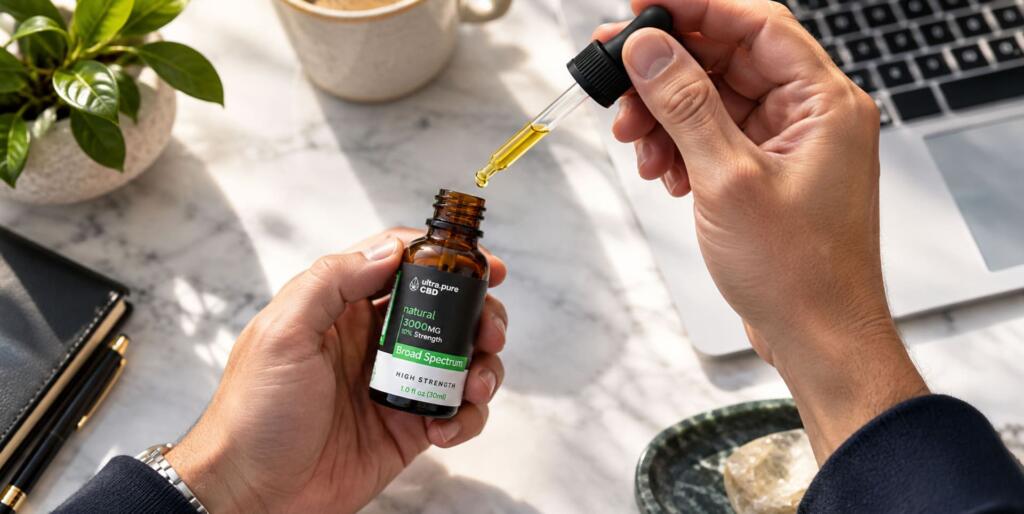
- Format: Pick any one daily format and stay with it. Sublingual oil is the standard for this job. Just add a few drops under the tongue, hold for 60 seconds, and swallow.
Vapes act fast but fade in two to three hours, which makes them the wrong tool for all-day, chronic support. Our Vivius vape exists for the moments when speed matters more than staying power. - Dosage: There is no universal CBD dosage because it depends on your age, weight, genetics, medical history, etc. Hence, we always tell our customers to start low at 5 to 10 mg and hold that dose for at least a week before judging anything. Only then increase or decrease your dose.
- Frequency: Chronic inflammation didn’t arrive overnight, and the first honest readings only show up after a month of consistent use. Just monitor what you notice: morning stiffness, joint comfort, how long the garden takes now. Small shifts are the signal you’re looking for.
One timing note: cannabinoids are fat-soluble. If you tend to swallow most of your dose rather than holding it under the tongue, take it with a fatty meal to help uptake. Either way, consistency beats timing.
P.S. If you want the full daily mechanics, timing, habits, and all, our CBD morning routine guide walks through it step by step.
Frequently Asked Questions (FAQs)
Pre-clinical evidence is positive. Human trial data is limited. Many people use it as a daily supplement for joint and general inflammation support.
No. Human evidence doesn’t support CBD as a replacement, and stopping prescribed medication without your doctor’s guidance is how small problems become big ones. Consult your doctor before changing your approach.
Yes. THC-free CBD is 100% legal in Georgia. Make sure it is legally imported and has a valid COA. This is the only kind we stock at I Love Joint. You can buy from our CBD range on our website.
Conclusion

The evidence around CBD and inflammation is promising. Many of our clients have come back thanking us for how CBD helped them in stressful situations.
That said, CBD is not a cure or complete medical replacement. It’s a supplement with a manageable risk profile that many people find useful for chronic inflammation support.
If you are someone who wants to try CBD in Georgia, trust I Love Joint- a premium CBD retail chain in Georgia.
All our products are lab-tested, legally imported from the USA, and come with a clear COA. You can browse it on our website or head to our stores located in Tbilisi and Batumi.