Introduction
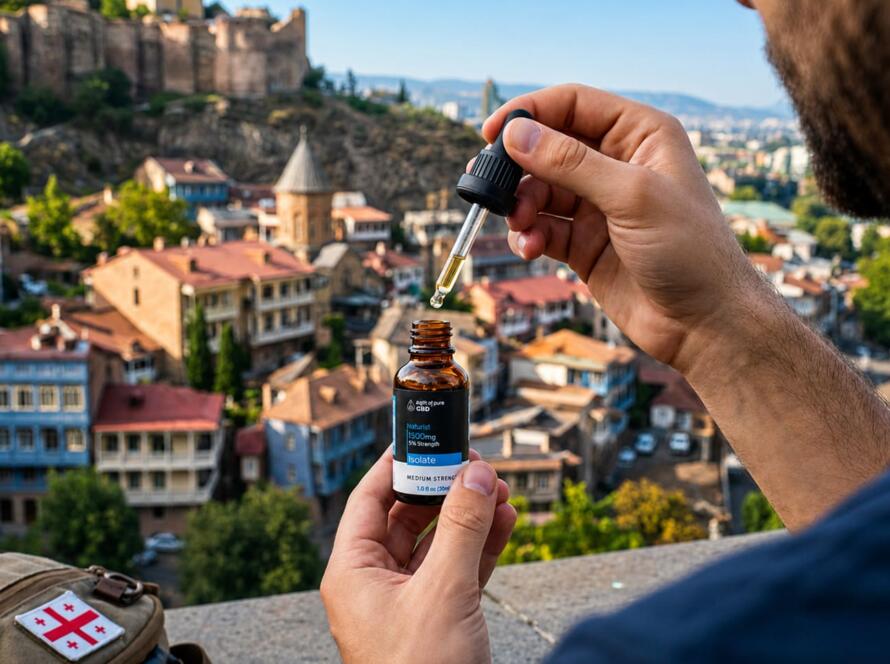
As CBD is getting popular in Georgia for its range of potential benefits, more and more people have been asking us, “How CBD oil is made?”
You see the bottle, the CBD content, maybe a few claims on the label. But you have no idea how & where it came from. Here at I Love Joint, we are all big on process transparency as much as ingredient transparency.
Today, we will take you through the journey of CBD extraction from hemp farm to the bottle in your hand. By the end, you won’t just know what’s in your bottle. You’ll know exactly how it got there. So, let’s get started!
CBD oil starts as industrial hemp grown in the USA, goes through CO2 or solvent-based extraction to pull cannabidiol from the plant, then gets filtered, combined with a carrier oil, and lab-tested before it reaches the bottle. What varies between products is the extraction method, the refinement stage (full spectrum, broad spectrum, or isolate), and whether a COA backs the label claims.
How CBD Oil is Made? Step-By-Step Process
Step 1 — Growing, Sowing & Drying
CBD comes from hemp – a sun-grown crop that likes a temperate climate and well-drained, loamy soil with a pH of roughly 6.0 to 7.5. Instead of marijuana, we at ILJ consider hemp-grown CBD due to low-THC seeds.
Farmers sow the seeds in suitable soil and monitor the plants throughout the growing season, managing water, nutrients, pests, and harvest timing. No pesticides are used, and all CBD is grown organically.
Finally, harvest lands in early autumn, when the flowers are at their stickiest and heaviest with cannabinoids. The plants get cut, then go straight into slow, controlled drying.
Once dry, the plant is pulled apart. Flowers go one way, because that’s where the CBD lives. Stalks and seeds go another way, off to the fibre and food industries — which is also why hemp seed oil and CBD oil are two completely different products.
At I Love Joint, we source our raw material from the USA, where cultivation is subject to established regulatory requirements and USDA oversight.
Step 2: Extraction
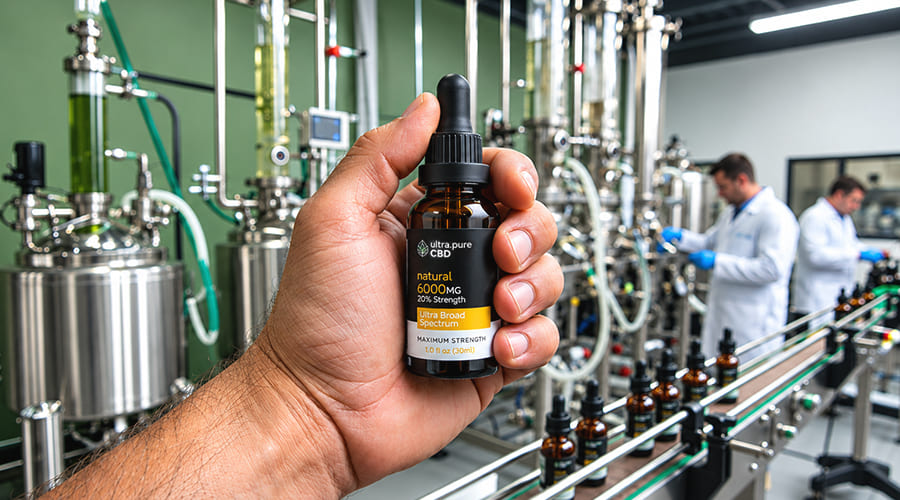
Cannabinoids need to be separated from the plant material and collected into an extract. That seems fine until the difficult part comes, i.e doing that consistently while managing unwanted compounds.
There are three common ways to do it, only one of which has become the industry gold standard.
- Supercritical CO2 extraction – This method uses pressurised carbon dioxide as the extraction medium. The CO2 strips out cannabinoids and terpenes, then simply evaporates away once the pressure drops.
- Ethanol extraction – This method is cheaper and faster, and uses food-grade ethanol to draw compounds from the plant. The only catch here is that ethanol happily pulls chlorophyll out of the plant as well. This leaves a bitter, grassy taste that has to be filtered out. It works, but it takes more refinement to get clean.
- Olive oil extraction – This is much simpler. Oil can be used to extract cannabinoids from heated plant material, but it is not typically the first choice for large-scale commercial CBD manufacturing. This is because the infused oil degrades quickly and cannot be concentrated properly.
Step 3: Filtering and refining
Whichever extraction method you choose, the first extract is not necessarily the CBD oil you put under your tongue. Because what comes out of the extractor is crude oil — cannabinoids and terpenes, plus a pile of waxes, fats, and plant lipids you do not want.
Producers may therefore use the following refinement techniques depending on the product they are trying to make:
- Filtration – to strip away larger unwanted particles
- Winterisation – CBD is mixed with ethanol, frozen to around -20°C overnight. The cold causes waxes and fats to separate from the extract
- Distillation – usually short-path or wiped-film, where heat and vacuum separate the fractions by boiling point and leave a clean, golden, cannabinoid-rich distillate
- Chromatography – Finally, it is used to separate specific cannabinoids (here in Georgia it would be THC).
From here, the CBD can go down three different roads. The result depends on how far the producer takes the refinement process:
| Points of difference | Full Spectrum CBD | Broad Spectrum | Isolate |
|---|---|---|---|
| THC content | Trace amounts, up to 0.3% | Completely removed | None |
| Terpenes and plant compounds | Full profile | Mostly preserved | None |
| Intoxicating effects | May be possible due to THC trace | Not at all | Not at all |
| Legal in Georgia | No | Yes | Yes |
Step 4: Adding a carrier oil
Pure CBD extract, whether broad spectrum or isolated, is too concentrated to use on its own. That is why the CBD extract is commonly mixed with a carrier oil, such as MCT oil, hemp seed oil, or coconut oil.
A carrier oil not only dilutes CBD, but it also affects the absorption rate and taste.
For example, one of our top-sellers, Ultra Pure Extracts CBD Broad Spectrum, uses fractionated MCT coconut oil. The 30 ml bottle is formulated at a 10% concentration. This means there is 100 mg of CBD in every milliliter, blended into fractionated MCT coconut oil for faster absorption.
Step 5: Lab testing and the COA
The last but most important step in the CBD hemp extraction process is quality testing. Once the oil has been extracted and refined, the finished batch needs to be checked to see what is actually in it. This is crucial for the safety of consumers.
Certificate of Analysis (COA) is the document that gives you that answer. It can show the CBD concentration, THC level, and results for contaminants such as pesticides, heavy metals, and microbial impurities.
Also, while it is not mandatory, reputable brands send their produce for testing to third-party laboratories for an unbiased report.
At ILJ, every CBD product is sent to a DEA-registered lab before it’s officially imported into Georgia. It also comes with a recent COA backing our zero THC claim.
Want to see one for yourself? Head to our FAQ page to request a COA for any batch we sell.
Step 6: Bottling and labelling
After the final formulation has passed the relevant quality checks, it can be filled into bottles and labelled.
The label should give you the basic information needed to understand what you are buying: the CBD amount, bottle volume, ingredients, product type, and other applicable information.
At this point, the long journey from hemp plant to finished CBD oil is complete.
But for the consumer, the investigation is not quite over.
What to look for when buying CBD oil?
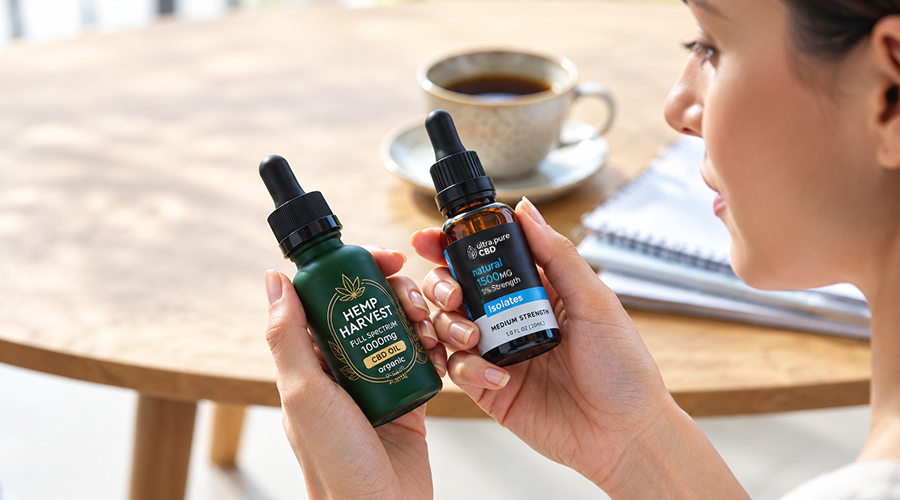
Don’t get fooled by cute packaging. It does not tell you much about the oil inside it. Before you buy CBD oil, look past the branding and check what the manufacturer actually tells you about the product.
1. Extraction method
Look for the extraction method on the label or the brand’s website. CO2 and ethanol are two common commercial methods, and knowing which one was used gives you more information about how the extract was produced.
2. Ingredient purity confirmation
CBD is legal in Georgia given that it is THC-free. But since the market is unregulated, a lot of brands sell CBD with hidden traces of THC. To avoid that risk, make sure you buy broad-spectrum or isolate oil.
Broad spectrum means the oil contains a range of cannabinoids and terpenes, but with the THC fully removed. On the other hand, isolate refers to the pure, unrefined crystalline form of CBD. It has 99.9% pure crystalline CBD with no terpenes or THC.
3. Third-party COA available on request
A real Certificate of Analysis comes from an independent lab, not the brand itself. If a company can show you one without hesitation, that’s a good sign. If they dodge the question or only show a screenshot with no batch number, that’s a red flag.
4. THC-free claim
Finally, don’t give in to marketing claims of ‘pure’ and natural labels slapped on CBD products. Instead, check the product description for a clear THC-free statement. The claim should be supported by the product’s lab report and COA.
Final thoughts
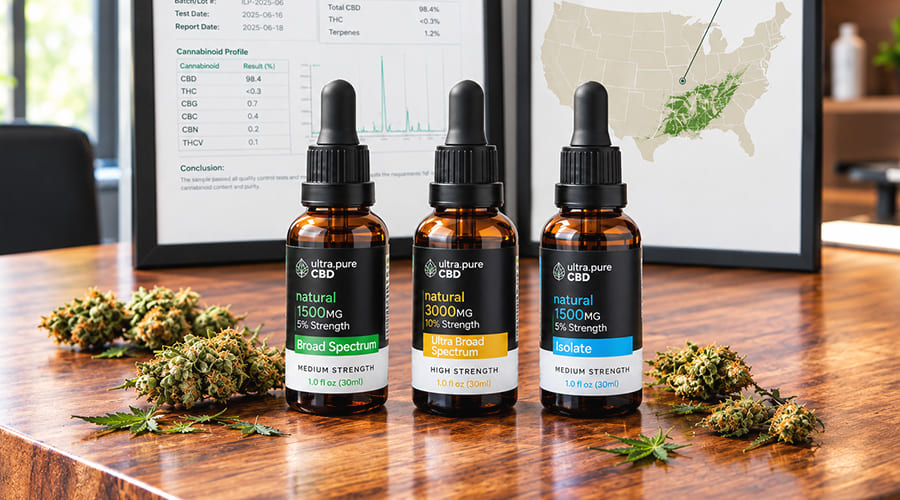
Good CBD oil is traceable, from the farm it was grown on, through the extraction method used, all the way to a lab report you can actually ask for. And that is the standard you must strive for when comparing products and choosing a brand you can trust.
At I Love Joint, our Ultra Pure Extracts broad-spectrum CBD oils are sourced from the USA and tested to verify their cannabinoid profile and THC-free status. Whether you are shopping in Tbilisi or anywhere else in Georgia, you can try our CBD oil at our stores and on our website.
Frequently Asked Questions (FAQs)
Both methods are safe when done correctly, but CO2 produces a cleaner output with no solvent residue. It also requires less filtering afterward.
No, all our products at I Love Joint are THC-free and 100% legal to consume in Georgia.
Ask for a COA and lab certificate that identifies the product or batch and shows cannabinoid results. Without a COA, you must not buy any CBD product.
There is no best oil, but among all, MCT oil (coconut-derived) has the fastest absorption. Hemp seed oil is also very common and well-tolerated.
No. CBD oil is made from industrial hemp with no intoxicating compounds.