Introduction
CBD for seniors needs a little more caution than it gets online. Today, the 50-plus population is running towards CBD to recover from pain, anxiety, poor sleep, stress, and inflammation.
Early research on some of these uses is encouraging. But the evidence is still limited, and results vary from person to person. Besides, since seniors take several medications at once, potential drug interactions are an important part of the conversation.
Consider this your best guide as we explore CBD’s potential benefits, safety concerns, dosage, and medication interactions.
- CBD is generally well-tolerated in older adults, but it is not risk-free. It can interact with certain medications like blood thinners, antidepressants, and heart drugs.
- Talk to your doctor before starting CBD. Always start with a low dose and increase slowly.
- At ILJ, all our CBD products are THC-free, lab-tested & legally imported into Georgia.
Why are seniors turning to CBD?
Getting older means changes in mood, sleep, joint comfort, and day-to-day mobility. Now, most of these concerns have been managed for years with NSAIDs, sleep aids, or over-the-counter anti-inflammatories — and some seniors are looking for alternatives after long-term use has started to wear on the stomach, the kidneys, or both.
This is why CBD has attracted interest as a possible option for managing some of these concerns, although the evidence varies by condition. See, CBD is non-intoxicating and does not produce the high associated with THC. For seniors who have watched friends or family struggle with stronger medications, that matters.
Secondly, it easily fits into the daily routine. A few drops under the tongue in the morning, or perhaps a topical on a sore knee before a walk. And lastly, the side effects of CBD are very mild and manageable, unlike other medications.
So, this combination of low side-effect burden, easy dosing, and non-addictive profile has made CBD one of the more popular supplements among older adults in recent years.
Is CBD safe for older adults?
Generally yes, in isolation. CBD is non-toxic at typical supplement doses, and there are no recorded fatal overdose cases in the medical literature. Even studies in adults over 50 have generally found CBD to be tolerable.
CBD can cause side effects such as sleepiness, diarrhoea, changes in appetite, or fatigue. But these are mild and settle on their own as the body adjusts, or when the dose is reduced.
The complexity comes from drug interactions. Older adults are more likely to take several prescription medicines, and CBD can affect enzymes involved in how some of those medicines are broken down.
That means CBD should not automatically be considered harmless just because it does not cause a high. So, for seniors taking regular medication, it is worth checking with a doctor or pharmacist before starting CBD.
Drug interactions — what seniors need to know
This is the part of CBD use that deserves the most attention.
Your liver uses a group of enzymes, known as the cytochrome P450 (CYP450) system, to break down many medications. CBD can slow down some of these enzymes. When that happens, a medicine may stay in your body longer or at higher levels than intended.
Now, is that good or bad? Let’s find out:
- Blood thinners (like warfarin)
CBD can raise the effective warfarin level in the blood, which raises the risk of bleeding. Anyone on warfarin should not start CBD without their prescribing doctor’s involvement, ideally with INR monitoring.
- Antiepileptic medicines (such as clobazam or valproate).
CBD can raise levels of some of these drugs, and combining it with valproate has been linked to liver enzyme changes.
CBD and heart medication
Some cardiovascular medicines are metabolised through CYP enzymes that CBD can affect. Amiodarone and verapamil, for example, appear in clinical discussions of potential CYP3A4 interactions.
That does not mean everyone taking a heart medication will have a problem with CBD. It means the specific medication, dose, health conditions, and CBD product need to be considered together.
This list is not complete. If your medication is not named here, that does not mean it is safe to combine. The safe way out is that before you try CBD, make a list of everything you take. Include:
- Prescription medicines
- Over-the-counter painkillers
- Sleep aids
- Vitamins and supplements
- Herbal products
Then show the list to your doctor or pharmacist. This applies to any CBD product, from any source — because the interaction is a property of CBD itself, not of the brand.
What seniors use CBD for — and what the evidence says
CBD is being explored for several concerns that become more common with age. But the strength of the evidence is different for each one.
Sleep
Sleep is one of the most common reasons people try CBD. A 2019 study in The Permanente Journal looked at adults with sleep and anxiety concerns and found that around two-thirds reported improved sleep in the first month of CBD use. But, the effect was not universal and tended to flatten over time.
So while CBD may support sleep for some people, there is not enough evidence to call it an established treatment for insomnia in older adults.
Joint pain & Arthritis
Joint pain and arthritis are another big reason seniors turn to CBD. In a survey cited by a review of CBD use in older adults, 40% of CBD users over 65 said they used it for pain, while 8% used it for arthritis.
There are also surveys suggesting that some people with arthritis feel CBD helps with their symptoms. But that does not tell us whether CBD itself is responsible for long-term improvement.
Anxiety
There is broader research into CBD and anxiety, including several clinical studies with encouraging results. However, much of that research has involved younger adults, small samples, or uncontrolled studies.
Nerve pain
CBD is also being investigated for neuropathic pain, including pain associated with conditions such as multiple sclerosis. The evidence is complicated because many studies have examined THC-CBD combinations rather than CBD alone.
While CBD can be taken as a supplement for above issues, it should not be marketed as a treatment for dementia, age-related cognitive decline, or cancer.
Which CBD formats suit older adults?
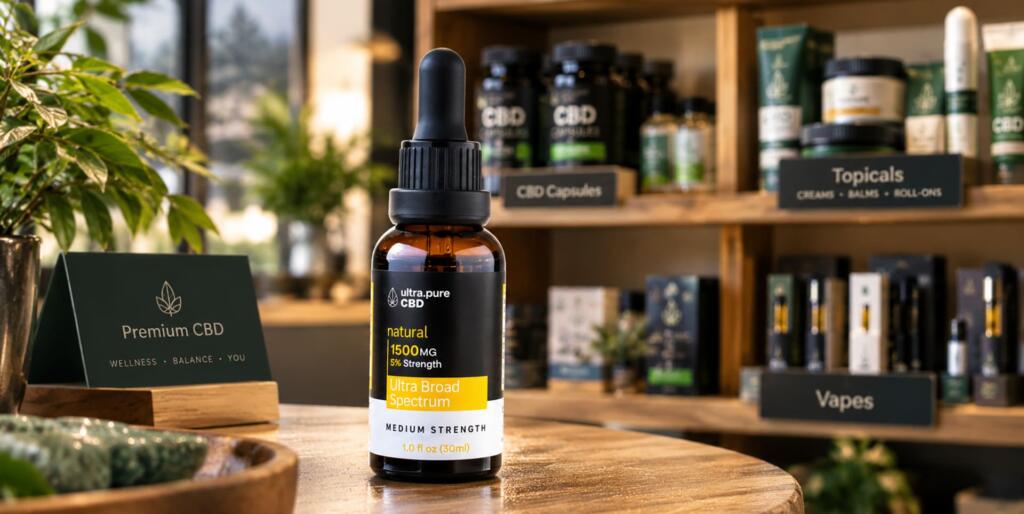
The most common CBD formats each have trade-offs for older users. Here is how they tend to compare:
- Sublingual oil
This is the format most often recommended for seniors. It is easy to dose precisely (you can adjust drop by drop), absorbs reasonably quickly, and does not require swallowing pills. The drawback? Dosage is not fixed.
- CBD capsules
Capsules provide a fixed amount of CBD per serving, which some people may find convenient. The trade-off is flexibility. You cannot easily take half a capsule — and they take longer to take effect.
- Topicals (creams, balms, roll-ons)
Topicals do not enter the bloodstream in meaningful amounts, so the drug-interaction concern is much smaller. Best for knee pain, stiff shoulders, or sore wrists.
However, evidence for CBD topicals in treating deeper joint or nerve pain remains limited. They should not be assumed to work in the same way as oral CBD.
- Vapes
Best for faster onset but not recommended for seniors with respiratory conditions like COPD, asthma, or any smoking-related lung issues. So, vapes are the least likely for senior citizens.
Our Ultra Pure Extracts 5% broad-spectrum CBD oil is built for exactly this use case: THC-free, third-party lab-tested with a Certificate of Analysis available
Frequently Asked Questions (FAQs)
Generally yes, but medication interactions are a real concern. If you take regular prescriptions, talk to your doctor before adding CBD.
Start with a low dose and then raise the dose slowly over a week or two as your body responds.
It can. CBD can affect enzymes involved in the metabolism of some medicines. Because heart medications vary widely, check with your doctor or pharmacist before combining them with CBD.
No, CBD does not cause any high effects like THC does. It is safe for consumption.
Conclusion
CBD can be a useful supplement for some older adults — particularly for sleep, joint discomfort, and low-grade anxiety. But it is not a replacement for prescribed medication.
Also, it is important to check whether CBD is compatible with everything else you are already taking. This can be blood thinners, seizure medication, heart medication, antidepressants, etc. So, start slowly and always consult your doctor.
If you would like to explore THC-free, lab-tested CBD oil formulated for everyday use, browse our premium CBD oils. And if you would rather speak to a person before buying, visit our stores in Tbilisi and Batumi.