Introduction
Search CBD vs THC, and the internet will make you more confused than you started with. Some articles mention they are cousins of the same plant. Others just explain how the compounds affect your body, ignoring the legal aspects.
So, is CBD the same as THC? Absolutely not.
Yes, they both come from the cannabis plant, but that’s where the similarities end.
THC (tetrahydrocannabinol) is a psychoactive compound that gets you “high”. CBD (cannabidiol) isn’t. And if you’re living in Georgia, that’s only part of the story. The legal difference matters more because CBD and THC are treated very differently under Georgian law.
So, before you buy your first bottle you need to know the legal stance, what each compound is actually used for, and how to verify the genuineness of the product.
CBD and THC are both compounds from the cannabis plant, but only THC is psychoactive. CBD won’t make you feel high and is legal to use personally in Georgia. THC is a controlled substance here. ILJ’s CBD products are DEA-lab verified at 0% THC, confirmed by an independent certificate of analysis.
CBD VS THC: Quick Difference In a Glance
| Feature | CBD | THC |
|---|---|---|
| Full name | Cannabidiol | Tetrahydrocannabinol |
| Will it get you high? | No | Yes |
| Psychoactive? | No | Yes |
| How it works | Interacts indirectly with the endocannabinoid system | Triggers the CB1 receptors in the brain |
| Legal status in Georgia | Legal for personal use when compliant with Georgian regulations | Not legal under Georgian law |
| Drug test risk | Pure THC-free CBD is unlikely to trigger a positive test, but contaminated products can | Likely to trigger a positive test |
| What to check before buying | Certificate of Analysis (COA), CBD strength, THC content | Not legally sold for personal use in Georgia |
| Best for | People looking for the benefits of cannabis without intoxication | Not suitable if you want to avoid psychoactive effects |
What's the actual chemical difference between CBD and THC?
CBD and THC have identical molecular formula: C21H30O2. Even the same atoms – 21 carbon, 30 hydrogen, and 2 oxygen atoms. Now, if they built from same ingredients, why are they not the same?
It comes down to chemistry.
Yes, both CBD & THC have same no. of atoms but the way those atoms are arranged is what makes them unique in function & properties. This is also why CBD vs THC effects on the body are very different from each other.
THC binds strongly to CB1 receptors, which are found mainly in the brain. This activates pathways linked to dopamine aka euphoria and makes one feel “high.” This explains why THC affects memory, coordination, and perception at long term high doses.
CBD behaves differently. It doesn’t strongly bind to CB1 receptors. Instead, it influences the endocannabinoid system more indirectly and also interacts with several other signalling pathways that researchers are still studying. Because of this, CBD is non-intoxicating. The WHO 2017 reports prove this claim.
So, CBD and THC may start with the same chemical building blocks, a tiny difference in their structure changes how they behave in the body, how they make you feel, and ultimately how they’re treated under Georgian law.
Which brings us to the next question…
Is CBD legal in Georgia? What about THC?
Before you buy any CBD product, there’s one question worth answering first: Is it actually legal in Georgia? The answer is yes for CBD, but no for THC. Let’s get into the details!
In Georgia, CBD and THC are treated completely differently under the law.
Following 2025 updates to Georgian drug legislation, THC and marijuana possession are heavily criminalized.
THC comes under the purview of narcotics department. Any sale beyond small personal amounts can now bring heavy fines and prison penalty. Even cultivation and distribution of THC and marijuana is banned. In other words, THC is now regulated under Georgia’s drug laws.
Now, you may wonder, “If THC is illegal, doesn’t that make CBD illegal too?” It’s a reasonable question.
To your good news, THC-free CBD products are still unregulated as it is not a substance like weed. Now because CBD doesn’t fall under the narcotics provisions, it can be consumed for personal use.
That’s why you will find legally imported CBD oils, capsules, gummies, vape and topicals from reputable retailers.
But this legality comes with one important condition:
Every product sold as CBD must be THC-free.
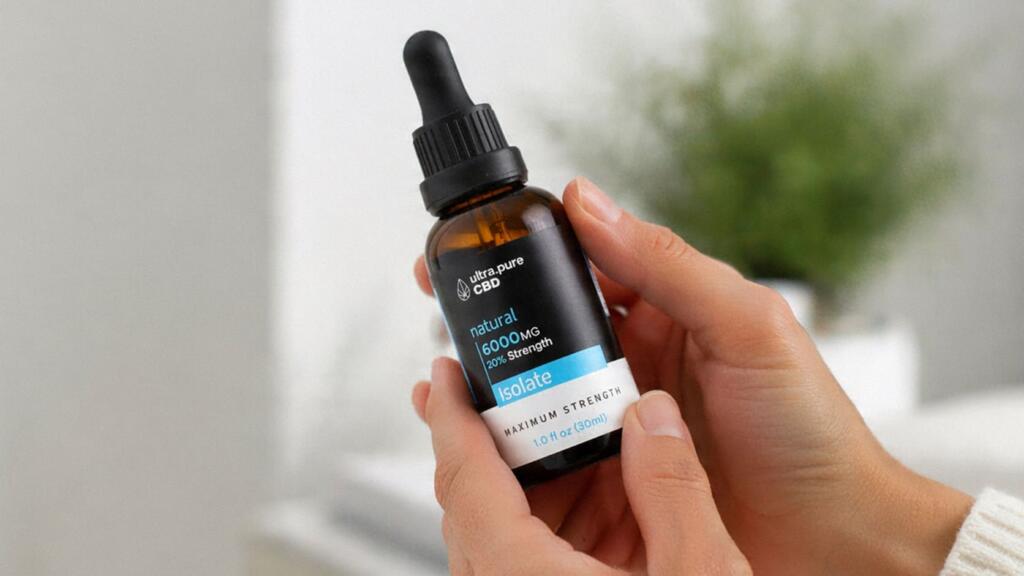
No fake marketing claims with deceiving labels will be allowed. For instance, our Ultra Pure Extracts CBD Oil is verified as 100% THC-free CBD oil. It comes with an accurate listing of CBD concentration, like 5%, 10%, 20%.
For now, the takeaway is this: if you’re buying CBD in Georgia, make sure you’re buying a product that genuinely contains zero THC.
If you want more in depth explanation on the CBD vs THC legal stance, you can check our detailed guide: Is CBD Legal in Georgia?
Does CBD get you high like THC does?
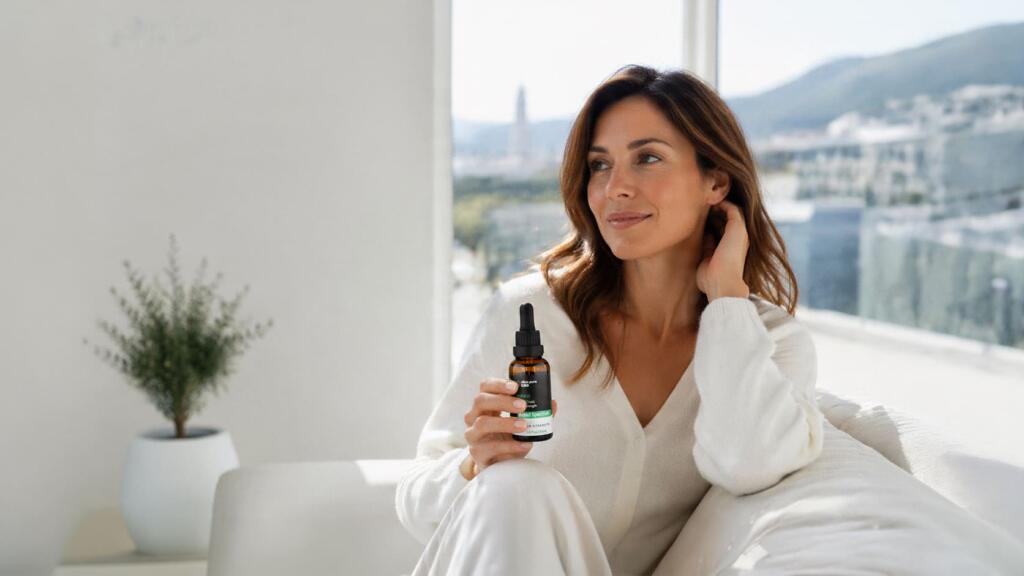
No, CBD won’t get you high like THC. But this question comes up a lot even in our stores. There are a few myths worth clearing up.
Let’s bust through them one by one.
Myth 1: CBD and THC do the same thing, just at different strengths.
They do not. The psychoactive effect of THC comes from its specific binding to CB1 receptors. CBD does not do this. In fact, it interacts with your endocannabinoid system far more loosely, through different pathways entirely.
Myth 2: CBD converts to THC in stomach
This claim made the rounds a few years ago and refuses to die. The idea was that CBD, when exposed to stomach acid, transforms into THC and gets you high. It doesn’t.
Myth 3: If it comes from cannabis, it must get you high.
Cannabis produces over 100 cannabinoids. THC is one of them. CBD is another. The plant also produces CBG, CBC, terpenes, and flavonoids. “Comes from cannabis” tells you nothing about high effects.
CBD VS THC: What is each one actually used for?
Now that you know the difference between CBD and THC, you might be wondering which one people actually use and why.
The truth is, they have some overlap, but they’re generally chosen for different reasons.
THC uses:
In countries where it’s legally available, it’s commonly used to help with appetite loss, nausea, and certain types of pain. Some people also use it recreationally because it produces a feeling of euphoria.
CBD uses:
Since CBD doesn’t have that intoxicating effect, many people include it as part of their everyday wellness routine to support relaxation. CBD products are also used to manage everyday stress and improve sleep quality.
Note: CBD is not a cure or a magic fix. Like any wellness product, people’s experiences can vary for everyone.
How do I know a CBD product doesn't contain THC?
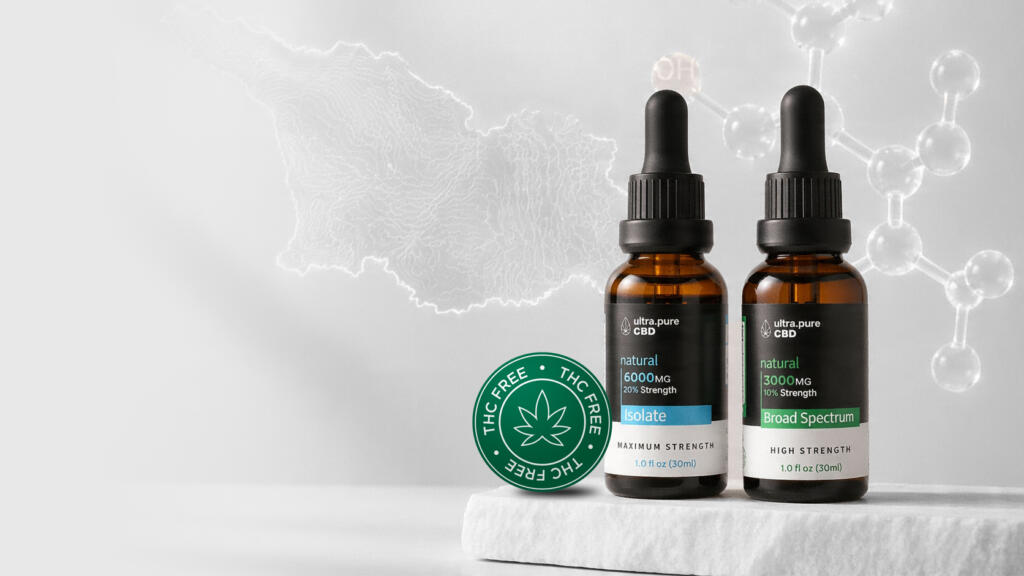
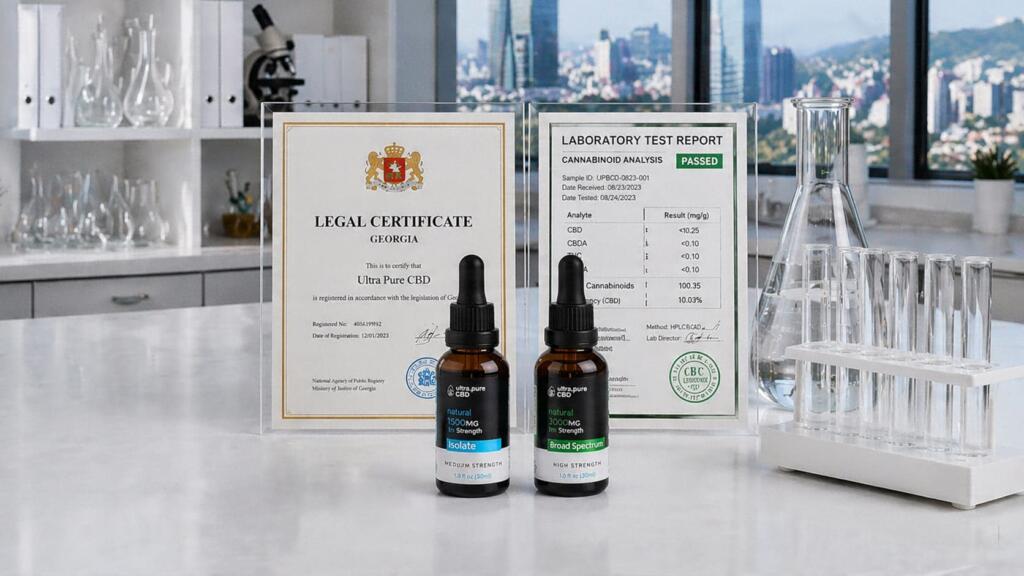
If you’re wondering, “Does CBD have THC in it?”, the COA gives you the answer.
A COA is an independent laboratory report that tells you exactly what’s in the product, including its CBD and THC content. It’s the only reliable way to spot products that don’t match their labels.
This matters because now-a-days, a lot of CBD products on the market are not what they say they are.
So, when reading a CBD label, look for:
- the CBD strength (for example, 10%, 15%, or 20%)
- the product type, such as CBD isolate or broad-spectrum CBD
- a recent COA showing the CBD and THC content
At ILJ, all products are tested by a DEA-registered US lab and officially imported into Georgia. We go the extra mile instead of making the gimmicky “third-party tested” claim most brands use.
Frequently Asked Questions (FAQs)
No, CBD and marijuana are not the same. Marijuana (also known as weed) has high level of THC content. It has legal impositions on consumption. Meanwhile CBD is a non-intoxicating compound found from cannabis sativa plant.
Pure, lab-verified CBD on its own shouldn’t trigger a positive. The problem is products that claim to be CBD but contain un labelled THC.
That’s exactly why checking the Certificate of Analysis (COA) matters when you buy CBD products.
More isn’t always better with CBD. It actually has biphasic properties so, low and high doses can produce opposite effects. The dosage depends on your body weight, purpose, the product concentration and other factors. You can check our CBD dosage guide to know more details
Following the 2025 updates to the Parliament’s drug laws, CBD is legal for personal use in Georgia. THC-free CBD topicals and supplements with DEA lab verified status can be bought from a range of retail outlets in Georgia.
No, CBD is non-psychoactive. Only THC produces that effect. That said, not all CBD products are the same. If a CBD product has THC, the effects can vary.
At ILJ, we sell THC-Free pure CBD products with COA certificate. You can check out range on our website.
Broad-spectrum CBD contains CBD and other beneficial hemp compounds like flavonoids and terpenes. But during processing, all THC is removed.
Conclusion
CBD and THC may come from the same cannabis plant, but they’re far from the same thing. They affect your body differently, they’re treated differently under Georgian law, and they’re used for different purposes.
So, before you buy any CBD product, ask for the Certificate of Analysis. If the brand can’t produce one, walk away. And remember, personal CBD use is legal here in Georgia, while THC is not.